

Traditional irrigation in Jeizinen/Gampel (VS)
The craft related to irrigation is part of a very important intangible cultural heritage in the Pfyn-Finges Nature Park
Without the bisses, extensive agriculture would be unthinkable in the Jeizinen/Gampel region, one of the driest areas in Switzerland located in the Pfyn-Finges Nature Park.
For several years, two retired farmers, Moritz and Charly Bitz, have been working to maintain the use of traditional irrigation in Jeizinen. An important aspect of their project with the Pfyn-Finges Nature Park is the preservation of the existing know-how and field activities related to this tradition for the younger generation.
The traditional irrigation of the Bisses is a big part of the Valaisan cultural heritage, together with the cultivation of rye, wine and raclette. In addition, the traditional management of water is tackled through education for sustainable development and makes it possible to talk about other issues such as the price, availability and consumption of this natural resource.
Irrigation, a 24-hour operation, is a good excuse for participants to enjoy being outside at night, or early in the morning. It is also a way for them to make real and sustainable experiences in the landscape.
The bisses
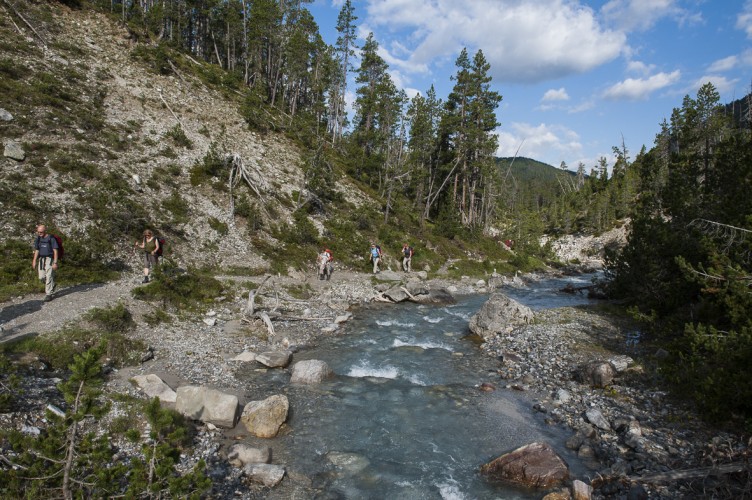
In Valais, the farmers used to build canals, the bisses, to bring water to their meadows and pastures. Often of glacial origin, the water can travel several tens of kilometres in these canals, flowing through the diversified and sometimes perilous mountain landscapes to reach the crops.
The origin of the bisses goes back several centuries. In the Middle Ages, they were already being built and although some have since been abandoned, others are still in use today. The management of the bisses and of the water is mainly communal, with each person taking what they are entitled to along the way. This social organization linked to traditional irrigation is very old.
Today, the bisses are also attractive to tourists. Several restoration and maintenance projects have been carried out throughout the Valais. The touristic valorisation of this heritage keeps this heritage alive and helps to protect it.


