Naturpark Beverin
Clugin church
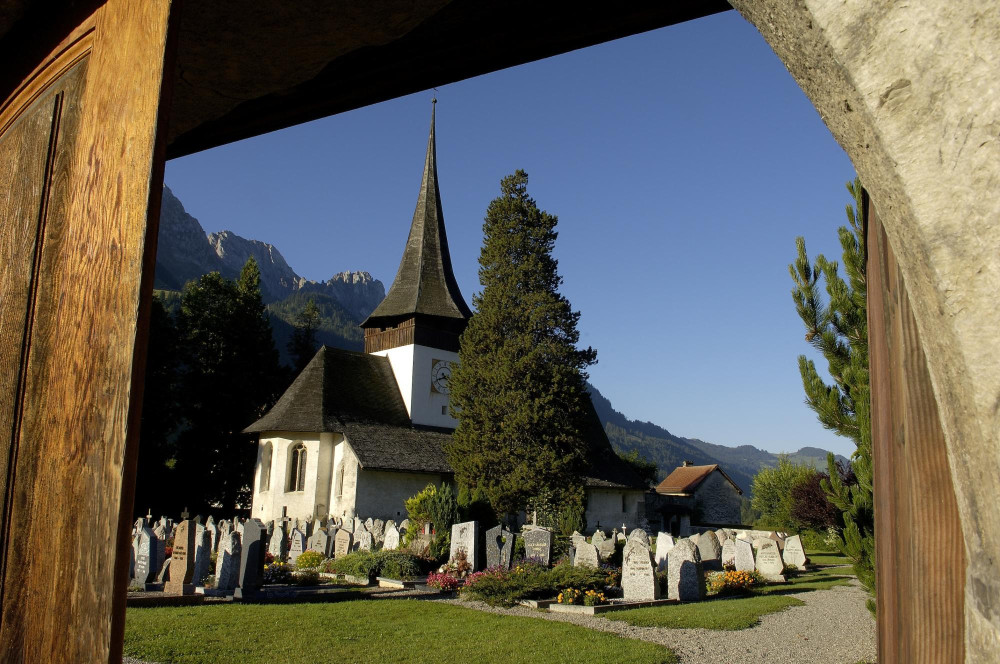
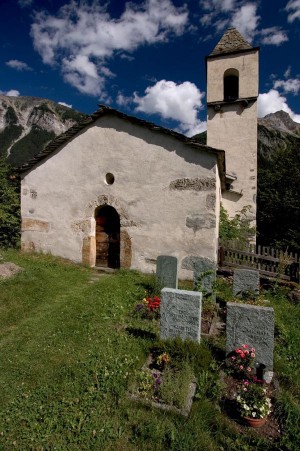
Following extensive restoration, the church in Clugin shines in new splendour. In no other church in the Schams region has the medieval decoration be so well-preserved as that in Clugin.
Church

Swiss Parks Network
Monbijoustrasse 61
CH-3007 Berne
Tel. +41 (0)31 381 10 71
Mob. +41 (0)76 525 49 44
info@parks.swiss

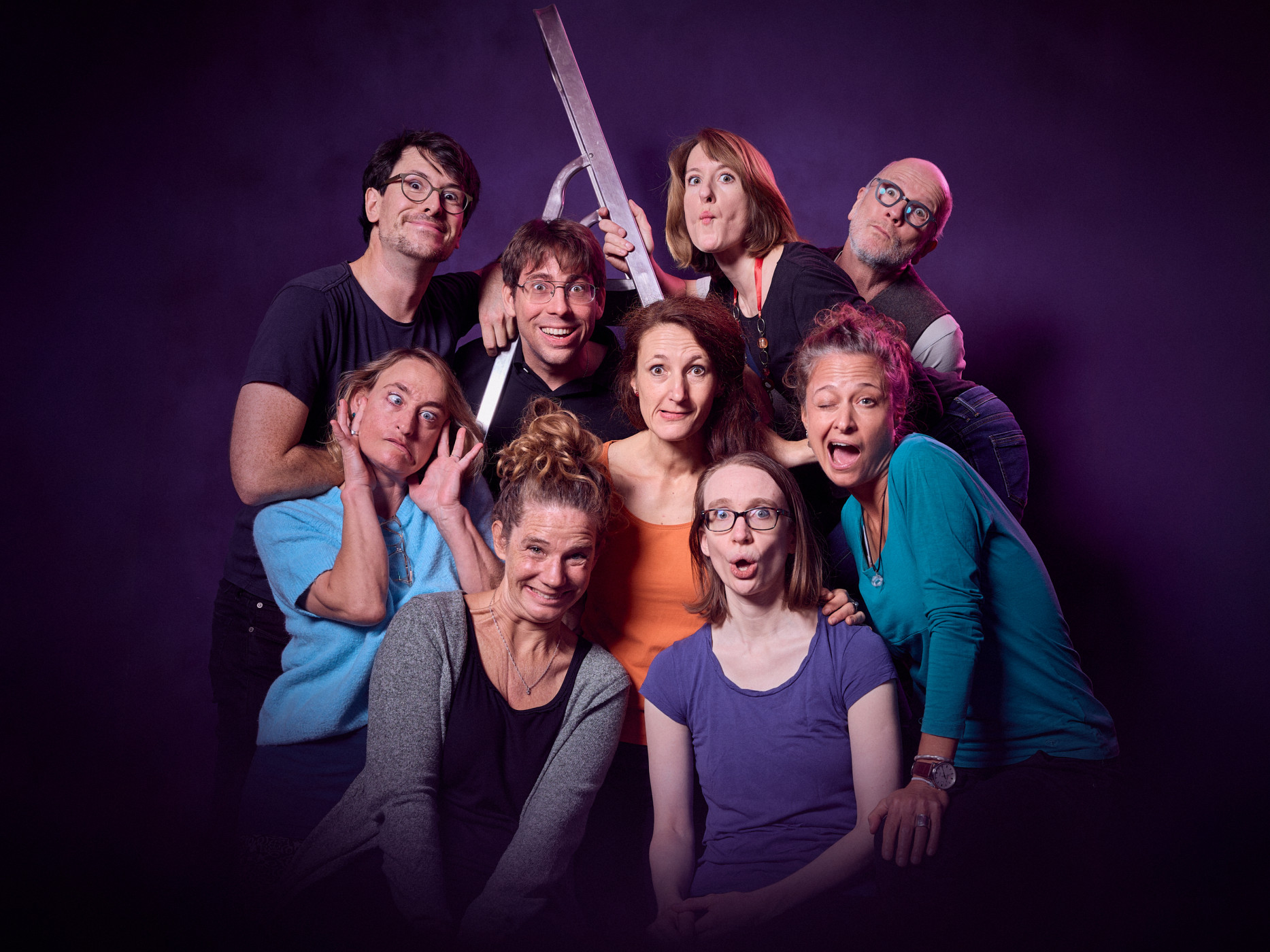
Following extensive restoration, the church in Clugin shines in new splendour. In no other church in the Schams region has the medieval decoration be so well-preserved as that in Clugin.
Despite the route's dangers and sometimes questionable condition, this path had two big advantages: it was the shortest route between the Pays-d’Enhaut, the Gruyères, and Léman (Lake Geneva), and it was passable almost year-round. It was also an important gateway for the inhabitants of the high valleys who couldn’t live in complete autarky. In the 19th century, however, the route’s roll changed. Tourists in awe of the panorama (and the echo off the Dent de Jaman) replaced cheese-makers little by little. Tour guides of the time often cited Lord Byron: “This view is as beautiful as a dream!”The pass, impassable by car and still closed to automobile traffic today, can be crossed (other than by foot) thanks to a tunnel built on the MOB (Montreux-Oberland bernois) railway line in 1904. This line remains the main public transportation axis between the Pays-dEnhaut, the Intyamon, and the Lake Geneva region.
Every variety of grape found in the Valais have been planted here on a single plot and labelled.
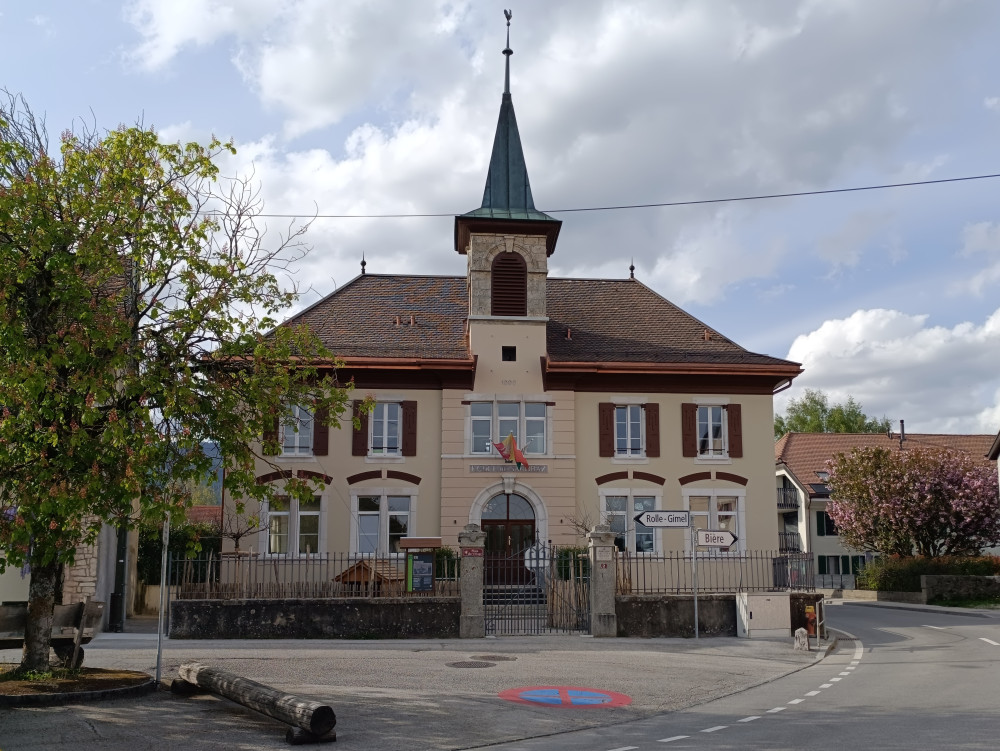
Après avoir abrité des ribambelles d'écoliers pendant cent an, l'ancien collège, désormais rénové, accueille le parascolaire. Le bâtiment typique est classé au Recensement architectural du Canton de Vaud.
Built in 1897, the chapel is an example of neo-gothic architecture. Its decorative murals are of the same origin as it solid oak altar. The Virgin and Child still sit here today, surrounded by Saint Philomène and Saint Elisabeth.
Its dazzling colour, its secretive life style and its rarity have made the common kingfisher famous.
The last 100 breeding pairs in Switzerland breed in natural river meadows of the Alps and Alpine foothills.
In the Anabaptist room of the Schleitheimertal Museum, you will find one of the four printed examples of the Schleitheim Confes- sion, which was composed in 1527 by Benedict monk, Michael Sattler, together with other Anabaptist leaders.
L'inventaire du patrimoine culturel immatériel réalisé par le Parc naturel régional Jura vaudois a permis d'aller à la rencontre de ceux qui connaissent ces contes, ces légendes et font vivre les traditions qui les accompagnent.
Crestawald Fortress Museum
Top secret for 60 years - today an impressive witness to Swiss military history.
This community is located on the slopes above Montslavens Lake, with an unobstructed view from its some 910 meters elevation. In the 17th century the village was completely destroyed by a fire. In 1667, the vicarage was the only building that escaped the flames. The Saint-Francois of Assisi Church was one of the first buildings rebuilt after the fire. It was constructed in late baroque style which is still visible today in the two interesting lateral altars found inside. The name Crésuz is from the latin cresta, meaning crest or hill. Today the municipality benefits from the development of regional tourism. Homes have sprung up in residential neighborhoods attracting population from the city of Bulle, not to mention a number of secondary residences.
This ice hole is 30 metres deep and there is a small glacier inside. The snow masses which accumulate here in winter turn to ice.
It is thanks to Jean-François Jaquet whose son miraculously survived an avalanche, that this chapel was constructed. The interior is decorated in immaculate neoclassic style. It evokes striped fabric with friezes and organic decoration and a faux arched vault. The Pieta dating from the end of the 19th century is located in middle of a small trompe-l’œil retable.
A lake in summer - cross-country skiing in winter. There are also beautiful walks around the Dauben Lake. In winter you can do cross-country skiing or go for a beautiful winter walk.
Die, durch die Rheinkorrekturen von 1897 entstandenen Altläufe, Weiher und Kiesinseln, bilden nun das Auengebiet Alt Rhy (Alter Rhein). Am gegenüberliegenden Rheinufer erkennen Sie die Mündung der Thur in den Rhein.
Die Biber ist der grösste Rheinzufluss zwischen Stein am Rhein und Schaffhausen. Gemütlich schlängelt sie sich durchs Bibertal und bietet Ihnen einiges zu entdecken, sowohl hinsichtlich der Flora, als auch der Fauna.
Bei der Schönen von Bibern handelt es sich um eine äusserst schmackhafte Zwetschgensorte. Für diese wurde eigens eine Skulptur errichtet.
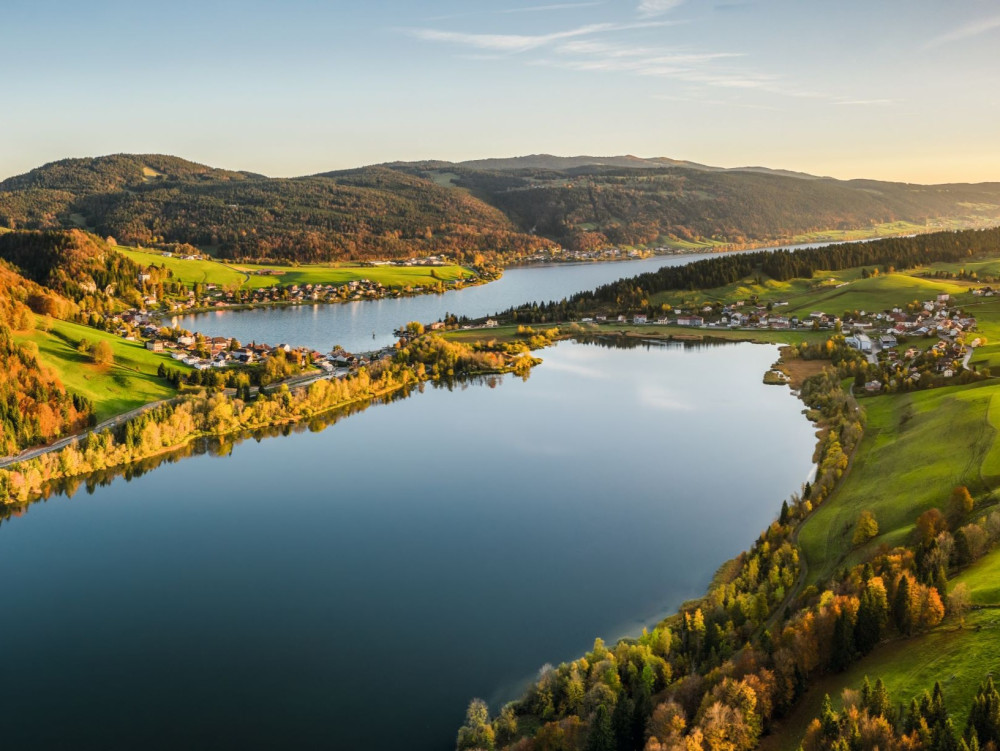
Der Lac de Joux im Herzen des Waadtländer Juras ist der grösste See des Juramassivs. Im Sommer zieht er Sportler und Naturliebhaber an, im Winter verwandelt er sich in nichts weniger als das grösste natürliche Eisfeld Europas.
The Diemtigtal (Diemtig valley) is mainly forested, whereupon the scenery is characterised by a mosaic of forests, meadows and pastures.
The village of Diemtigtal is proud of its status as «Site of national importance». The magnificent old wooden houses and the church characterise the whole valley and could certainly tell a few tales from history.
Die Ausstellung zeigt einen grossen Teil der reichen Vogelwelt des Naturparks Diemtigtal. Die Vögel wurden einem für sie typischen Lebensraum zugeordnet. Einen Besuch kannst du mit einem Spaziergang auf dem Vogelweg verbinden.
In the Frick Dinosaur museum in addition to a complete plateosaurus skeleton there is also a fossil predator dinosaur to be seen. An informative dinosaur nature trail takes you to the excavation area where you can excavate for fossils yourself.
Die Kapelle der Heiligen Familie steht am idyllischen Dorfplatz von Steinhaus und wurde um 1728 erbaut. Der buntbemalte Altar zeigt die Heilige Familie auf dem Tempelgang nach Jerusalem, begleitet von der Taube des Heiligen Geistes.
Als heimatkundliches Museum führt das Dorfmuseum Wiesen in die lokale Wohnkultur ein, vor allem in diejenige des 19. Jahrhunderts.
Ein Dorfmuseum der besonderen Art: In einem alten Bauernhaus erinnern originalgetreu eingerichtete Räume an das Leben aus längst vergangenen Zeiten.
Among all the insects that enliven the ponds and channels in the Pfyn forest, the dragonflies are definitely the most elegant and easiest to observe. There are two types of dragonfly in the forest: The small dragonfly and the large dragonfly.
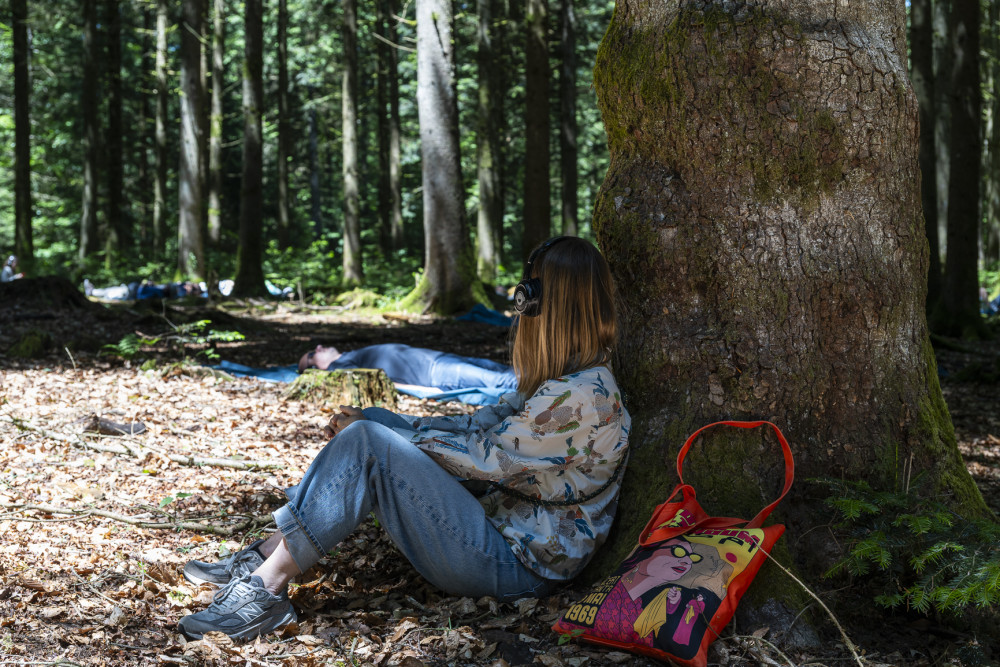
Du sol au ciel vous invite à vivre une expérience d’écoute immersive en pleine forêt.
The ‘Mitcha-Bou’ church, whose name is reminiscent of that of the inhabitants of Mollens, is a Cluniac site dating from the 12th century.
Rougemont's Saint-Nicolas Church was built by Cluny monks in the late 11th century. The church's architecture has elements of Romanesque architecture (classical model Cluny Latin cross), as well as the Reformation and the Bernese presence (shortened transept, enlarged apse, single roof, Oberland-style steeple). We can also observe the revival of reformation art in the early 20th century (paintings by Correvon, Rivier et Delachaux).
Der Egschisee ist nicht zuletzt ein beliebtes Ausflugsziel der Einheimischen. Hier lässt sich baden und bräteln. Aber Achtung! Der Egschisee ist ein Stausee. Das Baden geschieht auf eigene Gefahr.